


Introduction
Innovation is one of the most important ideas in today’s fast-changing world. When we talk about progress in technology, business, education, or daily life, we are actually talking about innovation. The innovation meaning in simple English is very easy to understand: it means creating something new or improving something that already exists to make it better, easier, or more useful.
In simple words, innovation is about thinking differently and finding better ways to do things. It is not always about inventing something completely new. Sometimes, small improvements in existing ideas can also be called innovation. For example, improving a mobile app to make it faster or designing a more comfortable chair are both forms of innovation.
The innovation meaning in simple English helps beginners understand that innovation is not limited to scientists or big companies. Anyone can be innovative in their daily life. Students, teachers, business owners, and even homemakers can use innovative thinking to solve problems.
What is Innovation?
Innovation is the process of turning creative ideas into real solutions that improve products, services, or systems. The innovation meaning in simple English can be described as “new ideas that create value.”
Innovation can happen in many ways. It can be:
- A completely new invention
- An improvement in an existing product
- A better way of doing a task
- A creative solution to a problem
For example, when smartphones replaced traditional mobile phones, it was innovation. When online banking replaced long bank queues, that was also innovation.
Innovation is not just about technology. It can be seen in education methods, business strategies, healthcare systems, and even cooking styles. The main goal is always the same: to make life better and easier.
Why is Innovation Important?
Innovation plays a key role in improving our world. Without it, society would not grow or develop. The importance of innovation can be understood in many ways.
First, innovation solves problems. Every day, people face challenges in life. Innovation provides better solutions to these problems.
Second, innovation improves quality of life. From better healthcare to faster communication, innovation makes daily life easier and more comfortable.
Third, innovation supports economic growth. Businesses that innovate grow faster and create more job opportunities.
Fourth, innovation increases efficiency. It helps save time, money, and effort by improving existing systems.
Lastly, innovation encourages creativity. It motivates people to think differently and explore new possibilities.
Detailed Step-by-Step Guide to Innovation
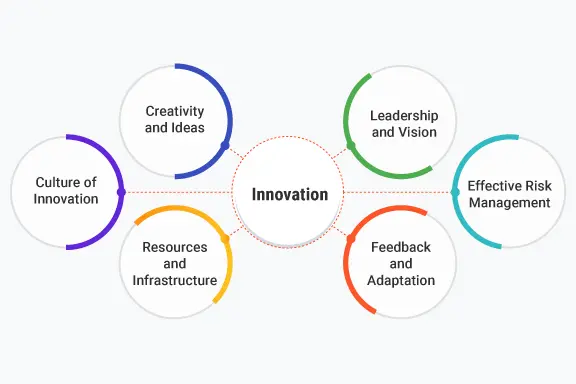
Step 1: Identify a Problem
The first step in innovation is identifying a problem. Every innovation starts with a need. Look around and observe what can be improved.
Step 2: Generate Ideas
Once the problem is identified, think of possible solutions. Brainstorm different ideas without limiting your thinking.
Step 3: Choose the Best Idea
Not every idea is practical. Select the one that is most useful, realistic, and effective.
Step 4: Plan the Solution
Create a clear plan on how to turn your idea into reality. This includes resources, time, and methods.
Step 5: Develop the Innovation
Start building or implementing your idea. This is where creativity turns into action.
Step 6: Test and Improve
After development, test your innovation. Find mistakes and improve them for better results.
Step 7: Implement Fully
Once everything is perfect, implement your innovation in real life or market it for use.
This step-by-step process makes innovation easier to understand and apply. It also strengthens the innovation meaning in simple English for practical learning.
Benefits of Innovation
- Improves quality of life by offering better solutions
- Encourages creativity and new thinking
- Boosts economic growth and job creation
- Makes processes faster and more efficient
- Helps solve complex global problems
- Increases competition and improves products
- Supports technological advancement
- Enhances learning and education systems
Disadvantages / Risks of Innovation
- Can be expensive to develop new ideas
- Sometimes leads to job loss due to automation
- New technologies may create security risks
- Not all innovations are successful
- Can increase dependency on technology
- May cause confusion during early adoption stages
Common Mistakes to Avoid in Innovation
One common mistake is thinking that innovation always means inventing something new. In reality, improvement is also innovation.
Another mistake is fear of failure. Many people avoid trying new ideas because they are afraid of mistakes.
Lack of research is another issue. Without proper understanding, ideas may fail in real-world situations.
Ignoring user needs is also a big mistake. Innovation should always focus on solving real problems.
Lastly, rushing the process can lead to poor results. Innovation requires patience and testing.
Avoiding these mistakes helps improve understanding of innovation meaning in simple English and leads to better outcomes.
FAQs
1. What is innovation meaning in simple English?
Innovation means creating new ideas or improving existing things to make them more useful, effective, or valuable.
2. Is innovation only about technology?
No, innovation is not limited to technology. It can happen in education, business, healthcare, and daily life activities.
3. Can anyone become innovative?
Yes, anyone can be innovative. It only requires creativity, observation, and willingness to solve problems.
4. Why is innovation important in daily life?
Innovation helps make life easier, faster, and more comfortable by improving systems and solving problems.
5. What is the difference between invention and innovation?
Invention means creating something completely new, while innovation means improving or applying ideas in a better way.
6. How can students practice innovation?
Students can practice innovation by solving problems creatively, doing experiments, and thinking of better ways to complete tasks.
7. Does innovation always succeed?
No, not all innovations succeed. Some fail, but failures help in learning and improvement.
Expert Tips & Bonus Points
Always stay curious and observe your surroundings. Most innovative ideas come from everyday problems.
Do not be afraid of failure. Every successful innovation goes through multiple failures before success.
Keep learning new skills and knowledge. The more you learn, the better ideas you can generate.
Focus on solving real problems instead of just creating new ideas without purpose.
Work with others because teamwork often leads to better innovation.
Practice thinking differently. Question existing systems and ask how they can be improved.
Understanding innovation meaning in simple English becomes easier when you apply these expert tips in real life.
Conclusion
Innovation is a powerful concept that shapes our world in many ways. From small daily improvements to large technological breakthroughs, innovation is everywhere. The innovation meaning in simple English shows us that innovation is simply about making things better and more useful.
It is not limited to experts or scientists. Anyone can innovate by observing problems and finding creative solutions. Whether it is in education, business, or personal life, innovation plays a key role in progress.
We learned that innovation brings many benefits such as improving quality of life, boosting the economy, and encouraging creativity. At the same time, it also has some risks like high costs and possible failures.
